
ETF Wizard
Replacing the ETF Course spreadsheets with a guided tool, so students can practise while they learn.
THE CHALLENGE
76.53% of Ethical ETF clients did not continue with the course
Students of the Ethical ETF course were stalling at the same step: the Excel files used to build and track a portfolio.
We turned those spreadsheets into the Wizard ETF, a guided web app that takes a student from their profile to a recommended portfolio, a PAC simulation and purchase tracking.
The app was used live for the first time at the in-person ETF course in Chiasso on 26 September 2026.

CONTEX
Ethical ETF is Moneysurfers' video course on building and running an ETF portfolio, sold as the Ethical ETF Boost bundle since 2022.
The practical part of the course relies on Excel files. Students use them to pick a model portfolio, plan a monthly investment plan (PAC) and log their ETF purchases to see how far they drift from the target allocation.
PROBLEM DISCOVERY
The Excel files were the point where students dropped out of the course. We reached that conclusion in two steps:
Customer care emails. Reading the support emails about the Ethical ETF course showed one recurring theme: students stuck on the portfolio and investment-tracking spreadsheets.
Database. We sized the problem against our client base: 1645 Ethical ETF clients in total, of whom 1259 did not go on with the course.
There was a gap between knowing and doing. Students learned the theory but had no simple tool to practice while studying, so many quit before investing and came to the live lessons asking what to do next…
PROPOSAL & APPROACH
We proposed a small web app where students enter their data step by step and build their ETF portfolio without touching Excel. The first proposal, ETF / Web-app minimale, listed five problems raised by students:
Applying the portfolios and tracking deposits with rebalancing
Applying strategies in a real political and economic context
Knowing when an ETF should be reviewed or removed, and by which criteria
Getting a clear view of the markets and of their own goals
Excel files that are hard to use for people who are not at ease with a computer
It sketched a 4-step flow investor profile, asset allocation, ETF selection, summary.
From there the work moved from idea to product in four documents and one build
One rule held throughout: the app reuses the portfolios, funds and PAC and tracking maths already used in the course. No new financial content was created.
THE SOLUTION: WIZARD ETF
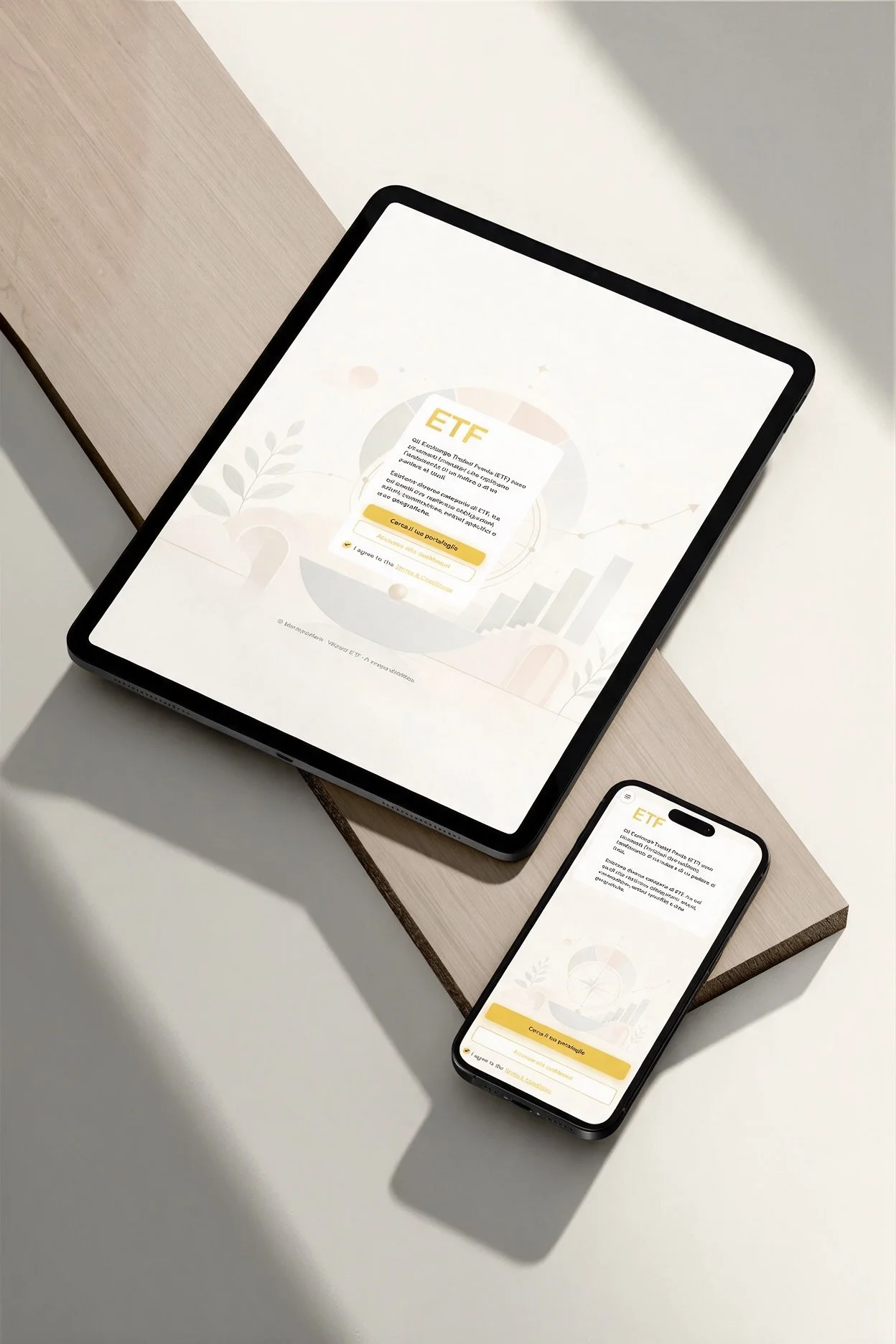
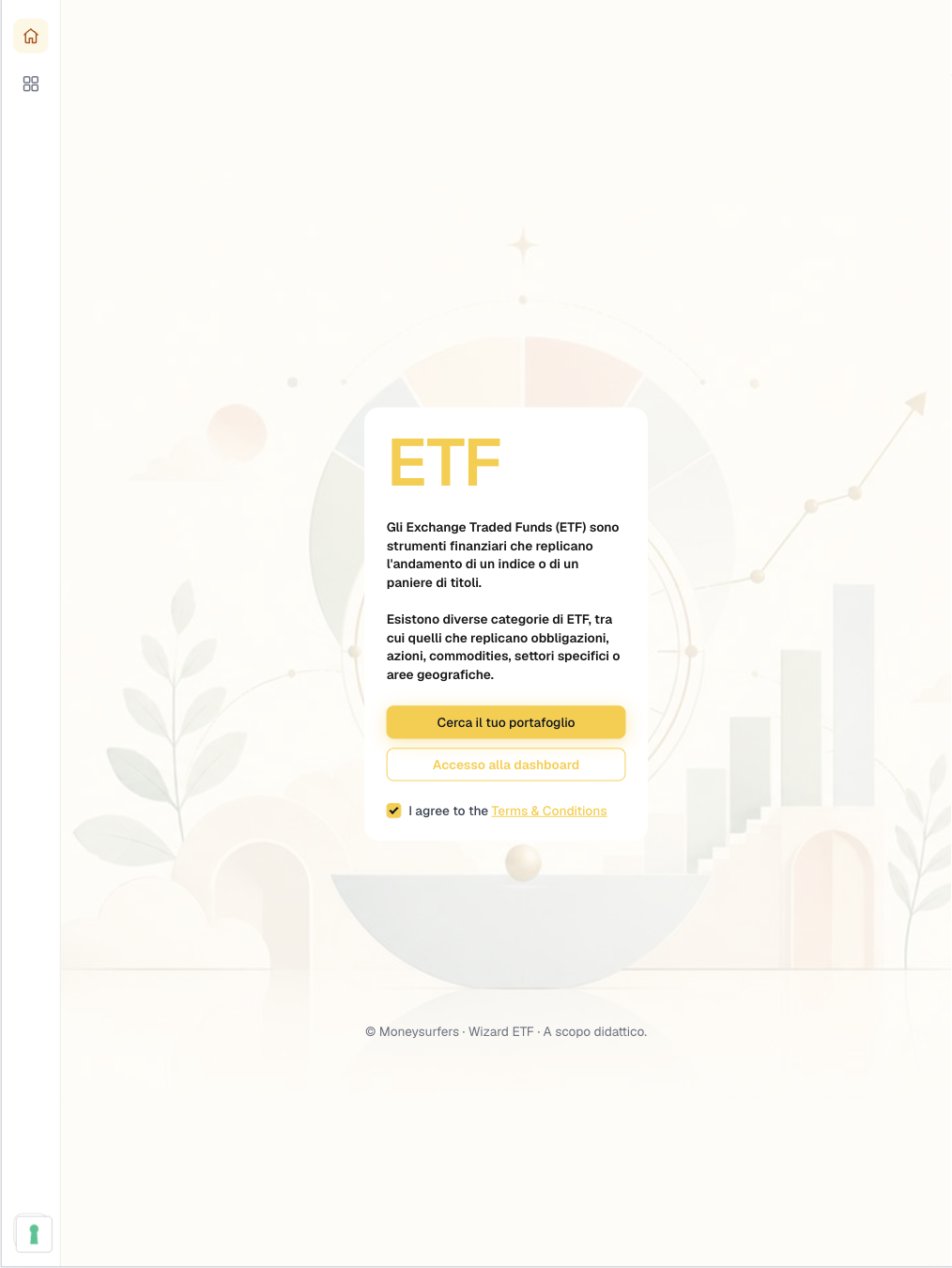
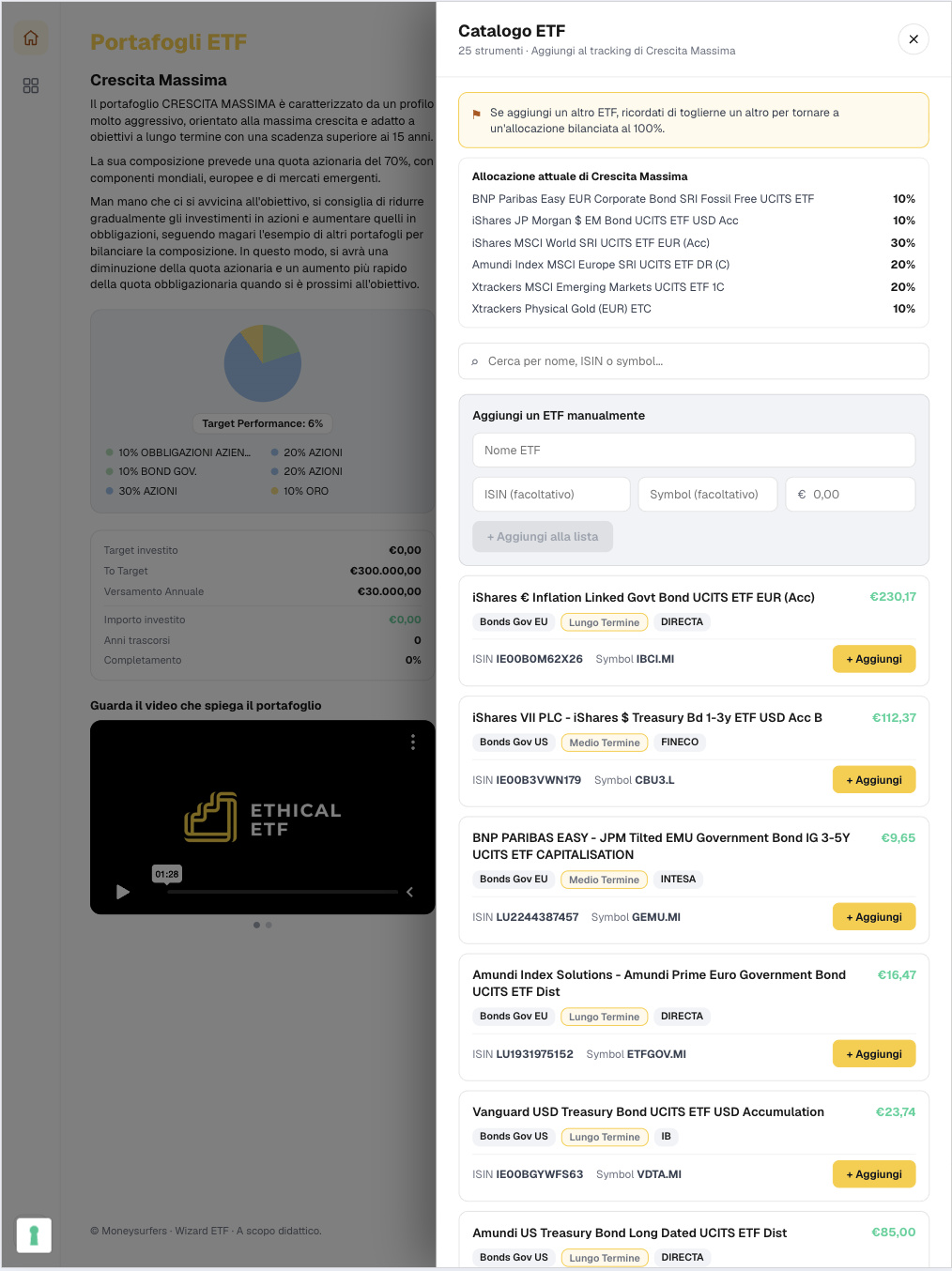
Wizard ETF replaces the course spreadsheets with one guided path, from the student's profile to tracking real purchases. It runs on desktop and mobile, embeds 14 course video lessons, and was live in production before the event.
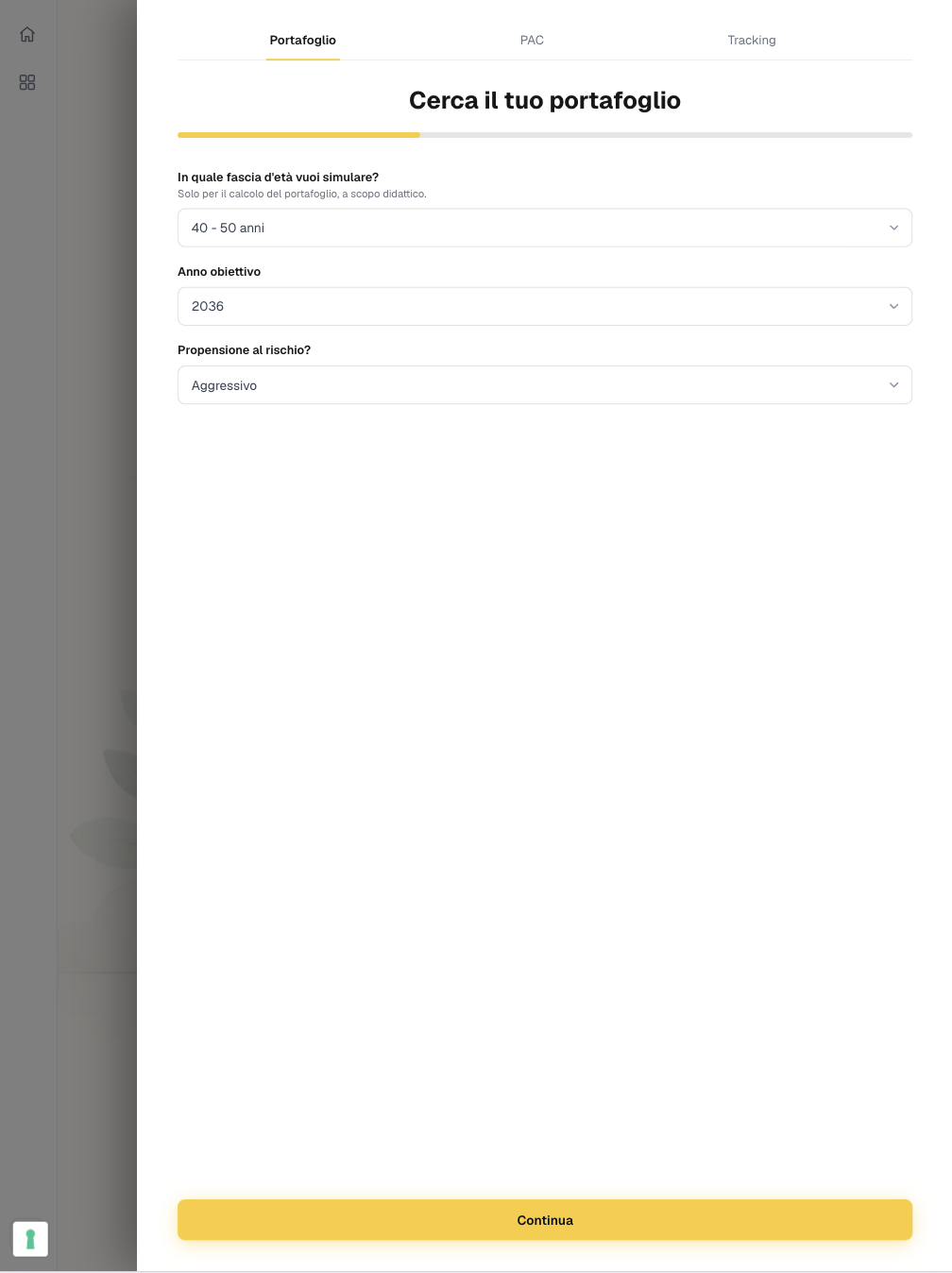
Profile. Age band, target year, risk appetite and type of deposit, after accepting a disclaimer that the tool is for teaching, not financial advice.
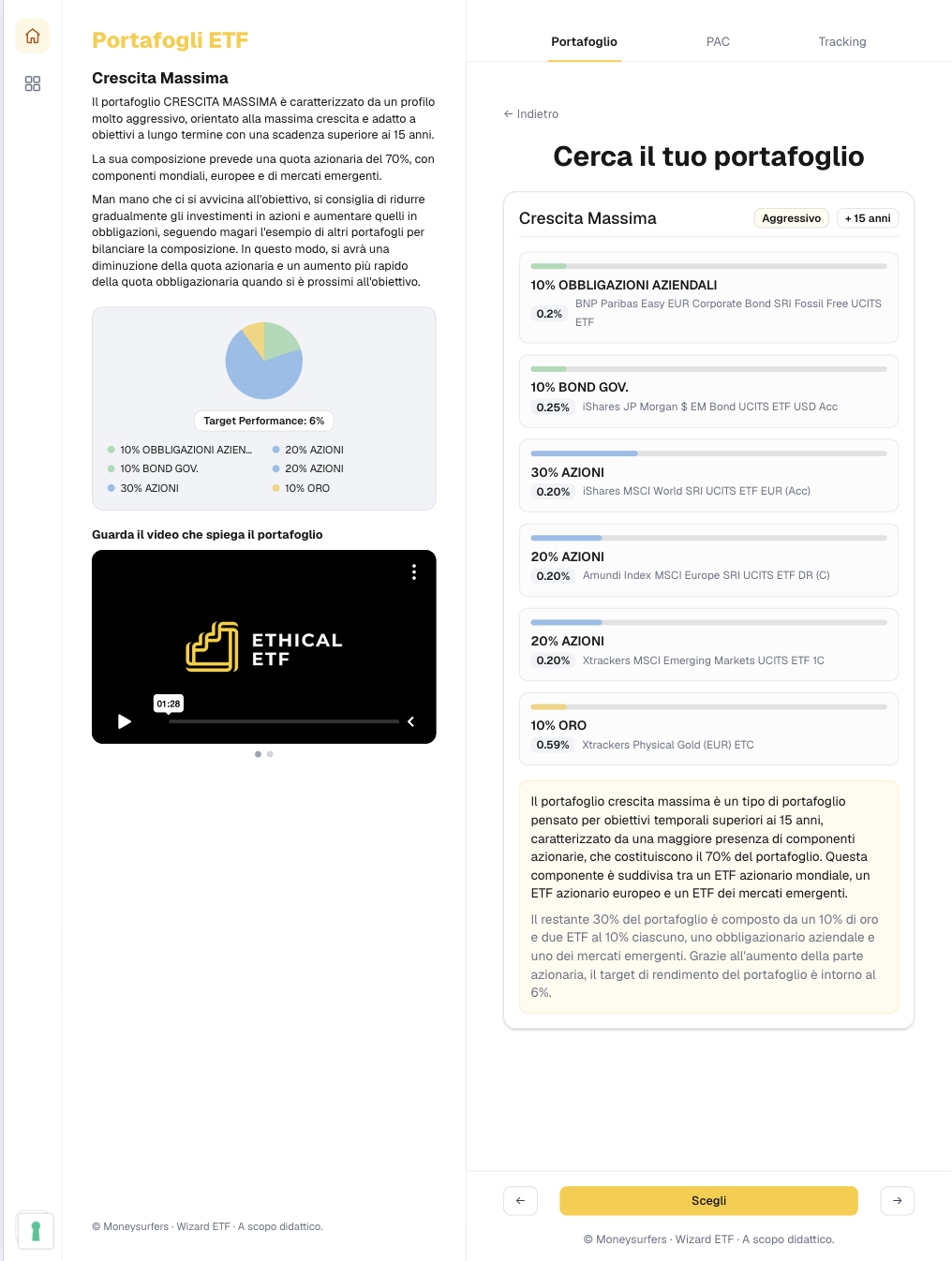
Video lessons. The 2 course lessons about that portfolio, shown in context.
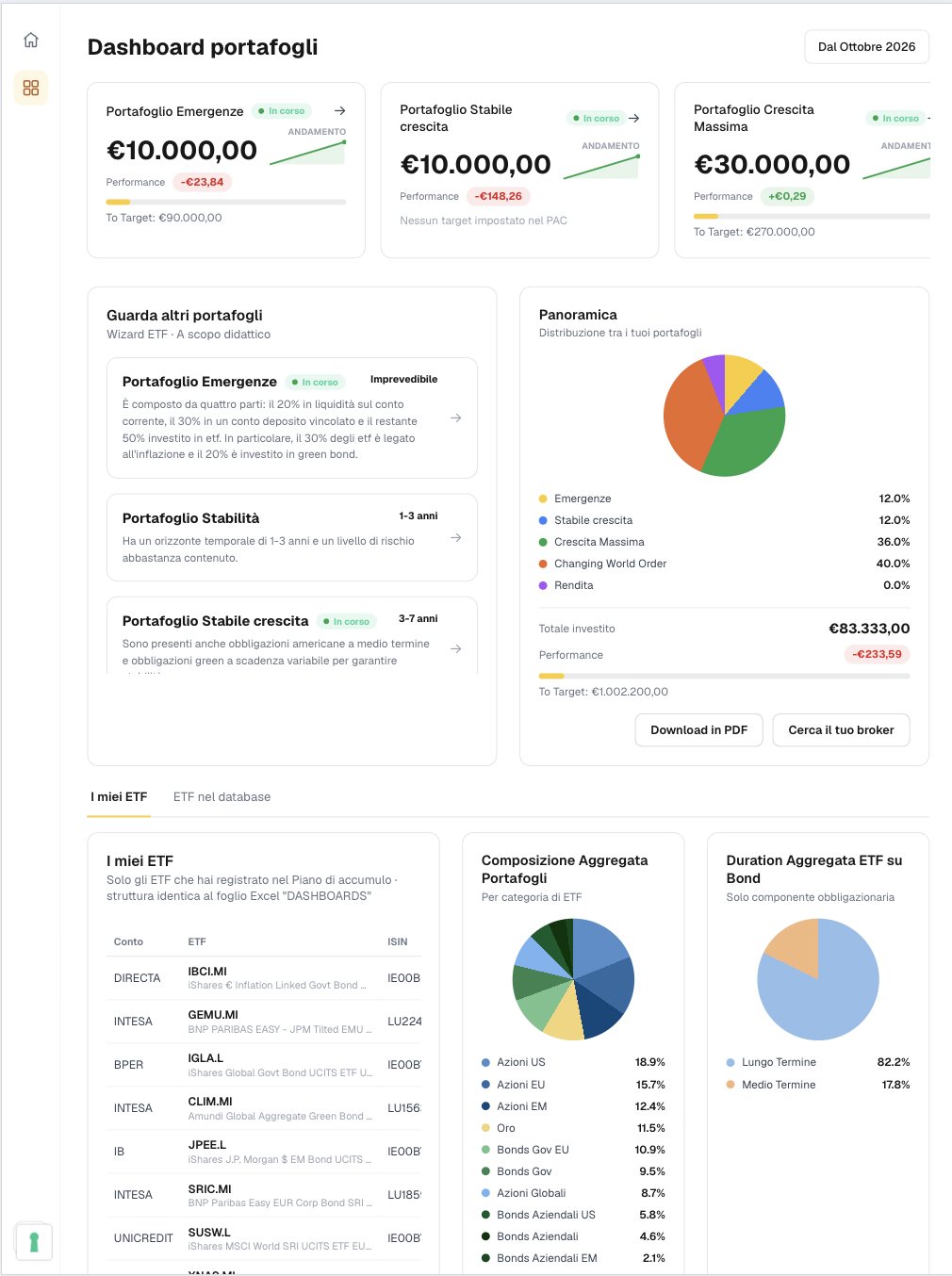
Dashboard. All started portfolios, how capital is split and overall performance.
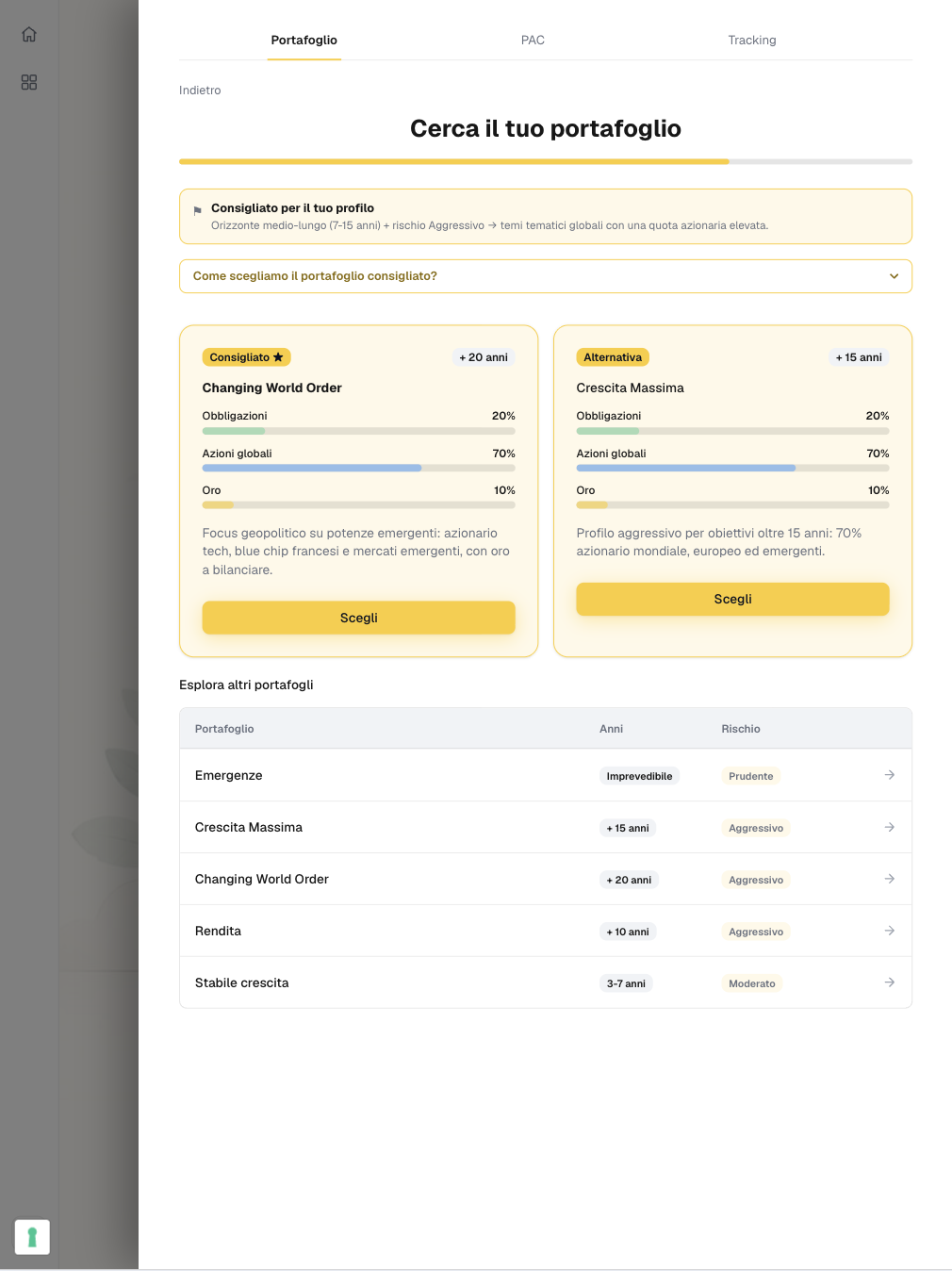
Recommended portfolio. One or two portfolios that fit the profile, with the reason for the choice.
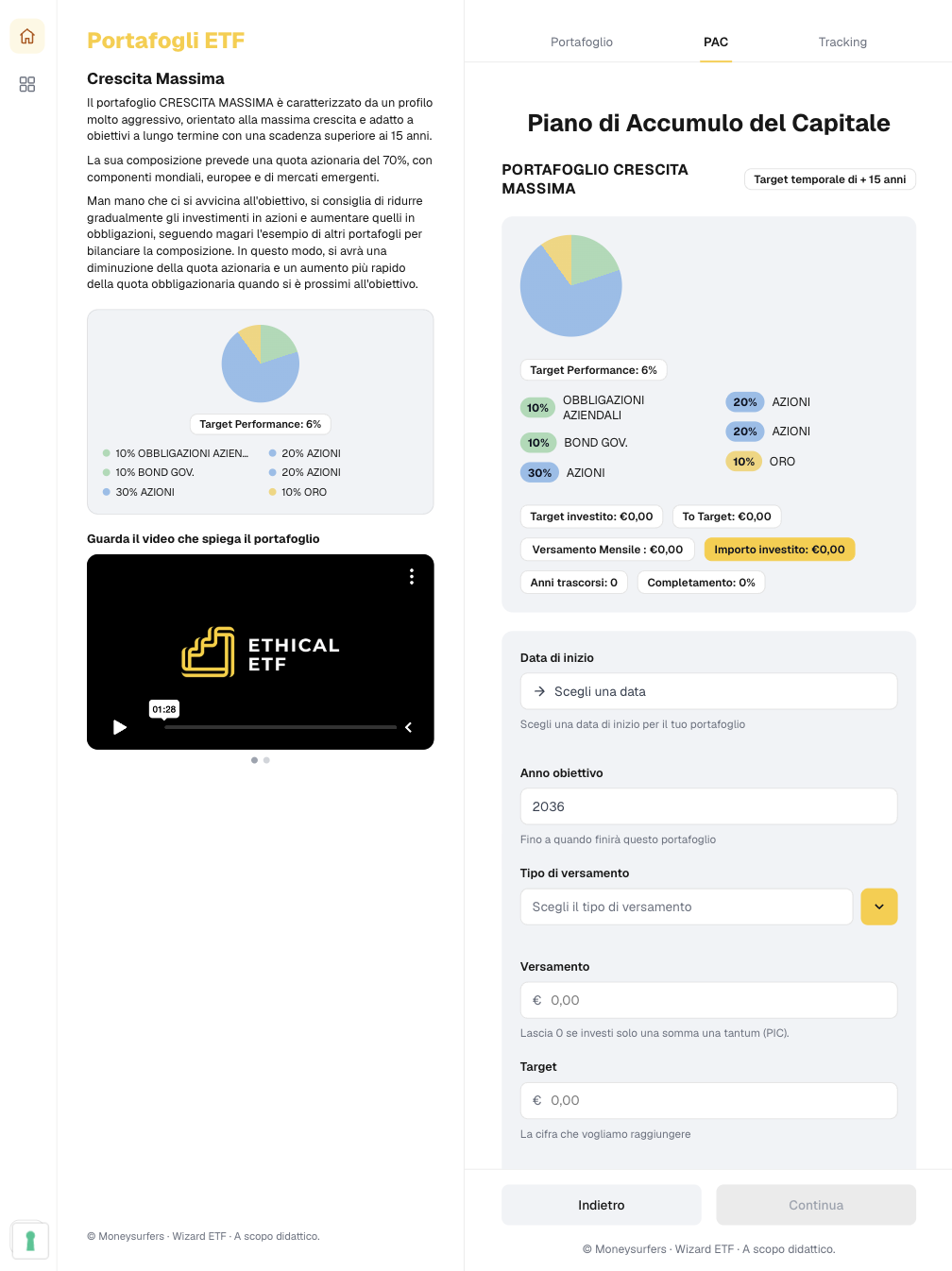
PAC simulation. A monthly investment plan towards a money goal, with a check on whether the goal is reachable.
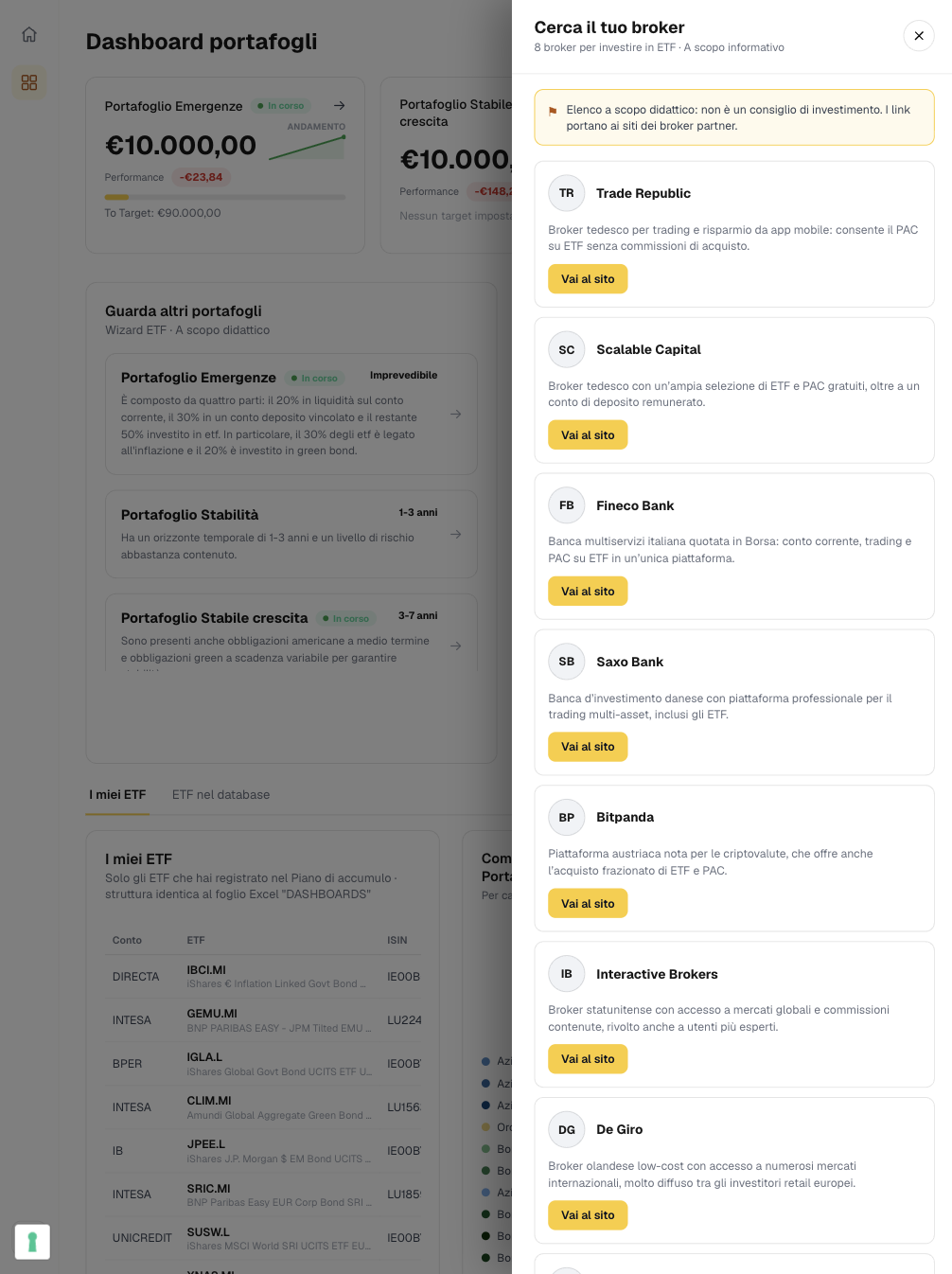
Exit. The plan as a PDF and a list of 8 brokers to start investing.
Composition. Allocation, categories and underlying funds of the chosen portfolio.
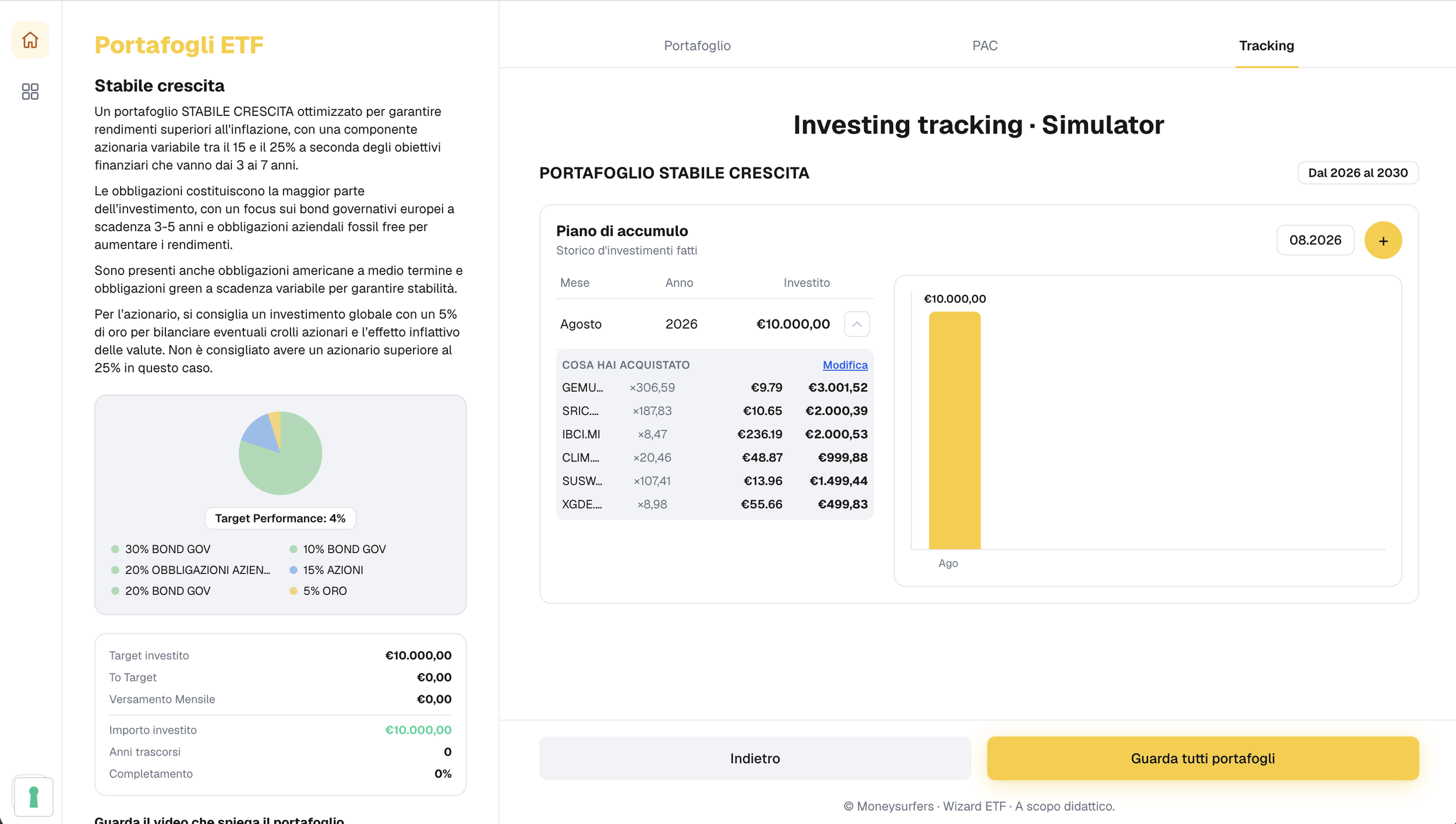
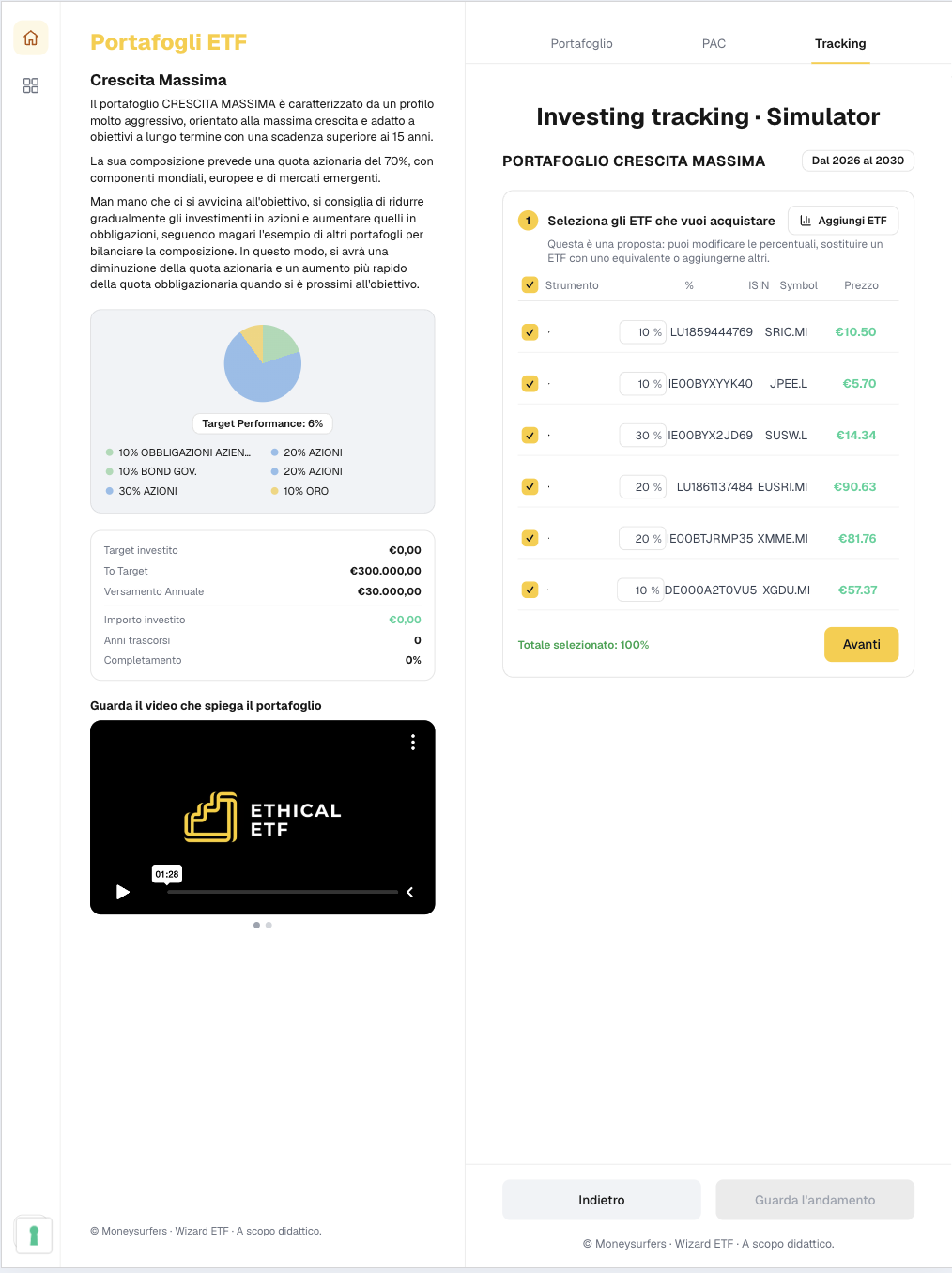
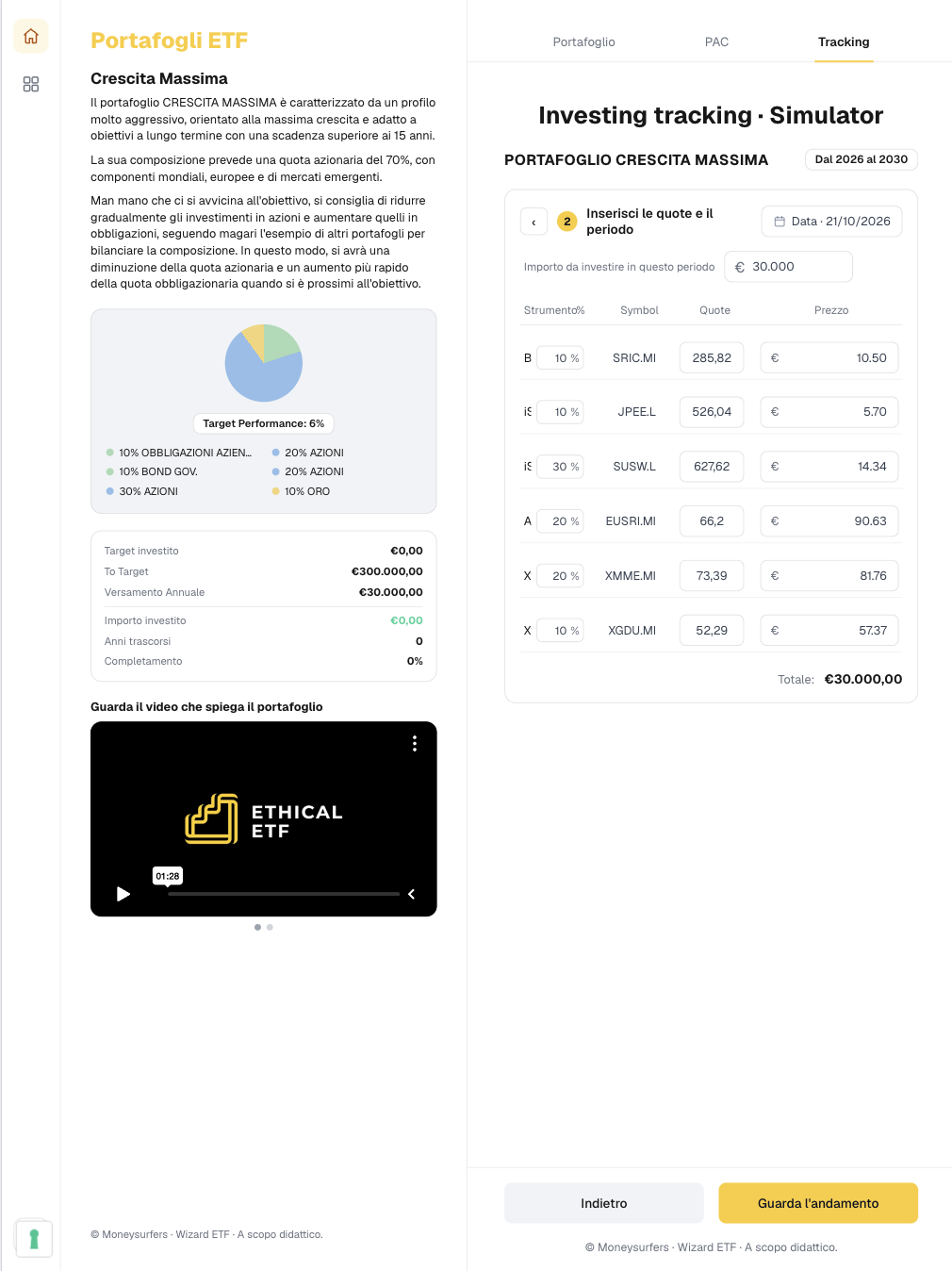
Tracking. Real purchases logged, drift from the target shown, and rebalancing suggested in the same two modes as the spreadsheet.
VALIDATION
The first real test was a hands-on workshop at the in-person ETF course in Chiasso, Switzerland on 26 September of 2026 .
The audience was people who bought the course at the May 2026 webinar plus earlier ETF buyers.
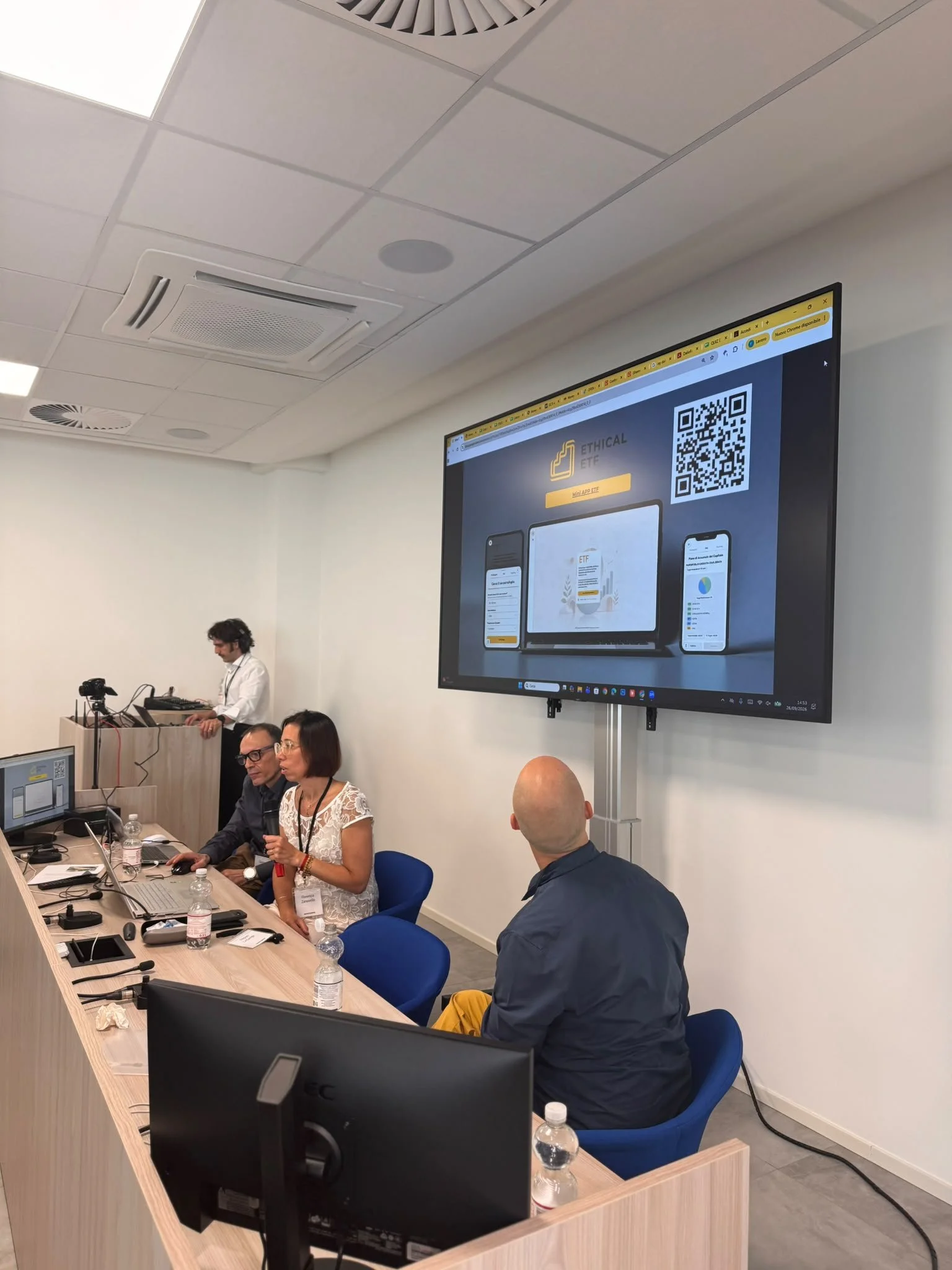
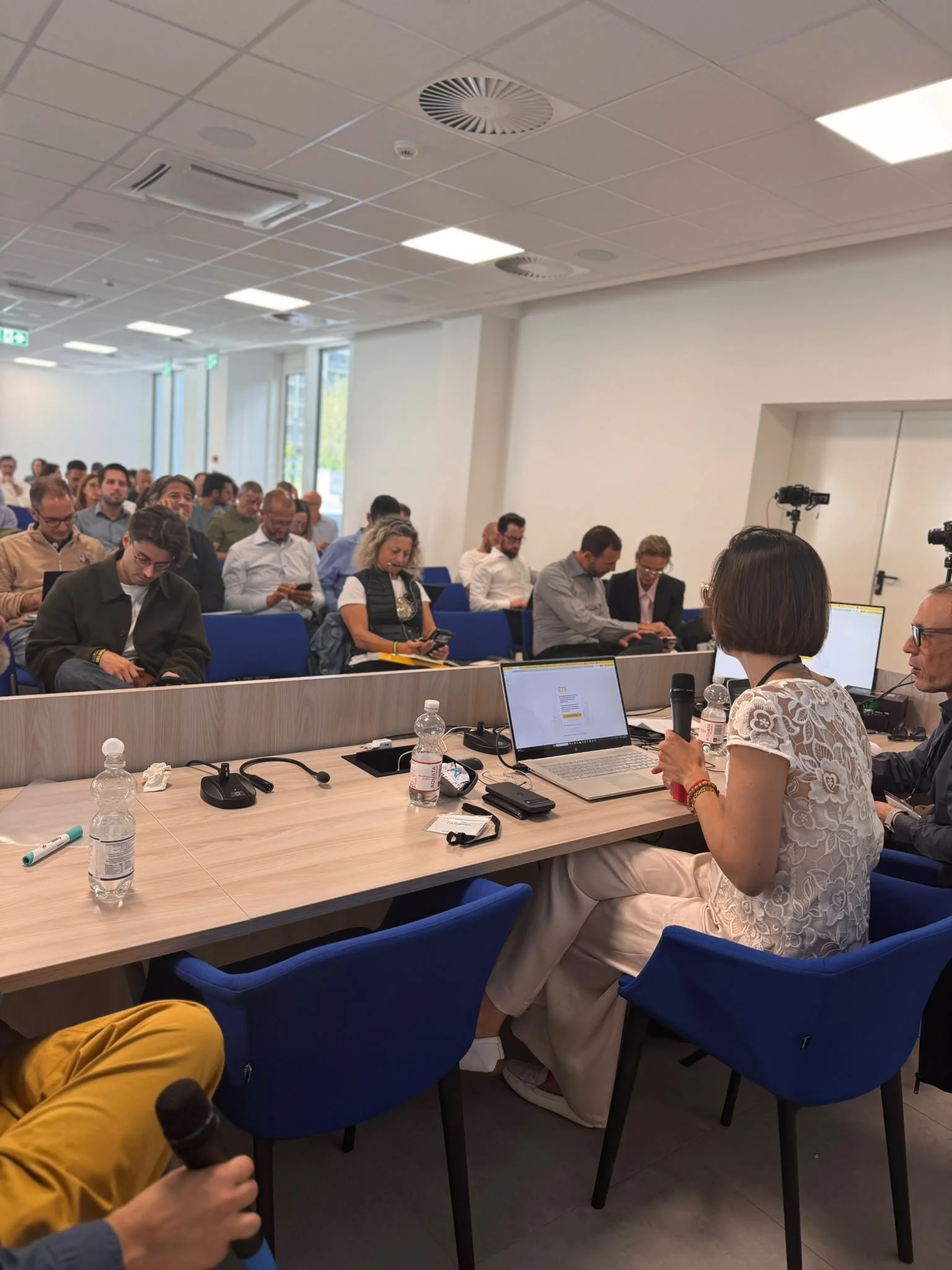
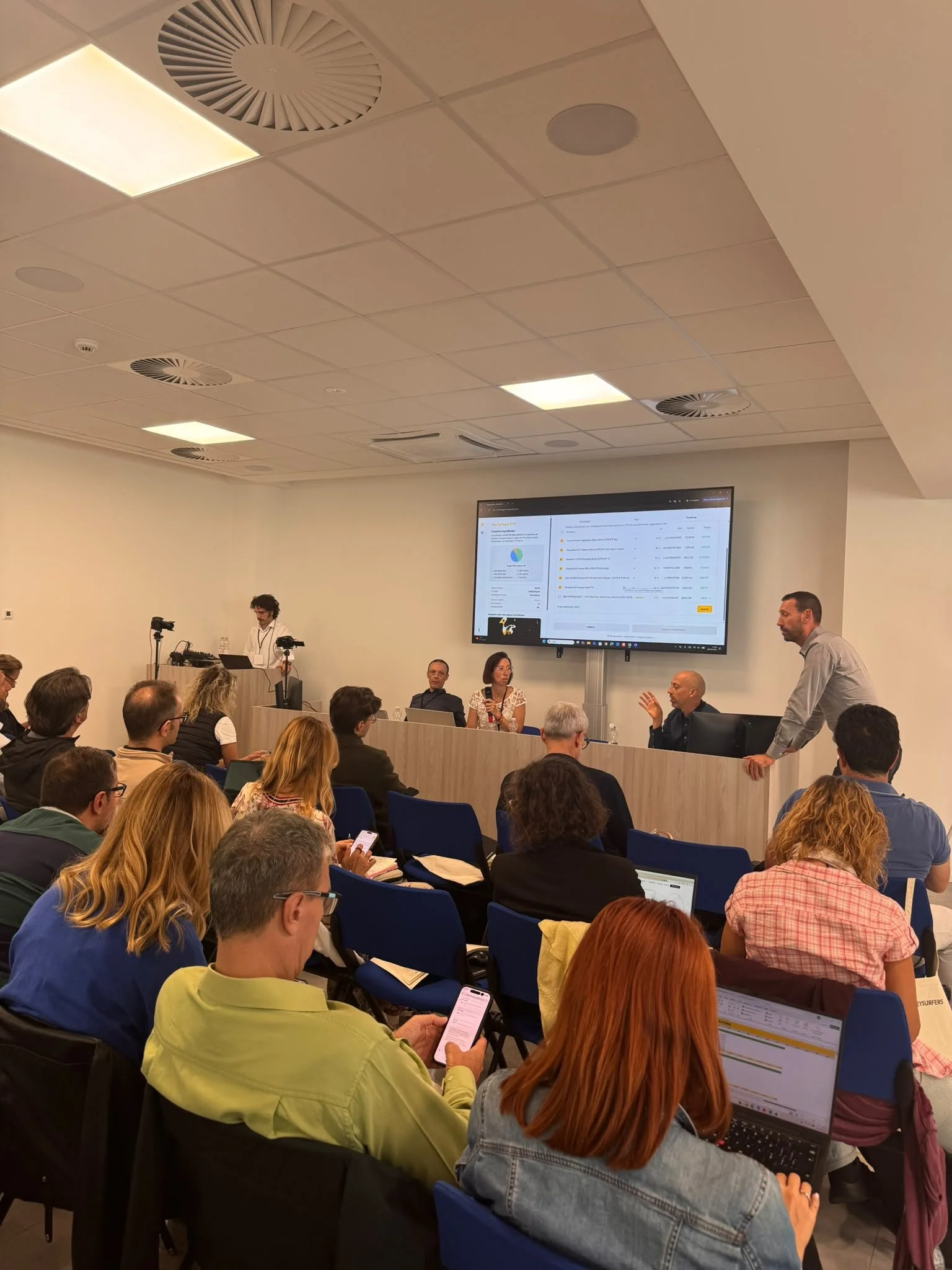
We presented the course files and app as a substitute of excels. Three traders in the room asked each student where they got stuck, which no other moment in the year allows.
We collected evidence from five sources that cross-check each other:
Self-assessment tests at the start and end of the day
Short interviews during the breaks, using a set interview grid
Direct observation by the traders
Session recordings and heatmaps in Microsoft Clarity, plus Google Analytics
An in-app feedback banner before closing, asking how useful the app was and whether students prefer it to Excel
RESULTS, LEARNING and NEXT STEPS
The app went from a support-email pattern to a production tool used in a live classroom with the production build starting one month before the event. Its outcomes on dropout are not measured yet: the event evidence is collected but not yet analysed.
What we delivered
A production web app covering the full practical path of the course, on desktop and mobile
14 course video lessons placed inside the portfolios they explain
A PRD and a business plan kept in sync with the product, with work tracked in Jira
Analytics, cookie consent and an in-app feedback channel ready before the first real users
What we learned
Support emails are product research. The blocker was visible in customer care well before it showed up anywhere else.
Remove the step, don't explain it better. Students did not need more theory; they needed a tool to practise with while studying.
Regulation shapes the product. Keeping the broker list neutral and unranked is what keeps the app within the scope of financial education.
Test where you can watch. A one-day event gives no reliable conversion rates, but it shows exactly where people get stuck.
